
Algae problems? How to clean your swimming pool
- 09 May 2026|
- News
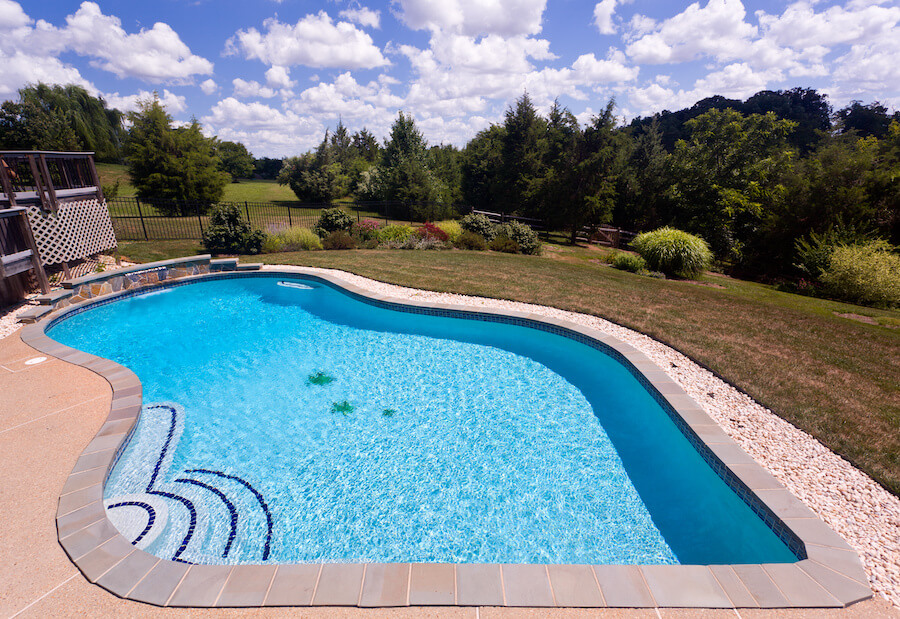
On the face of it, peeling back your pool cover for the first time in a while only to discover that algae has made itself at home in your water can be very worrying.
Whilst it’s tempting to put the cover back on, pretend you haven’t seen anything and tell yourself that you’ll sort it next year, it can actually be a fairly straightforward fix, as algae is usually only caused by a chemical imbalance in your water.
If you’re here as the summer approaches, and you’re asking yourself ‘how to remove algae from swimming pool,’ the tools you’ll need for the job include a stiff pool brush, a reliable testing kit (or test strips), chlorine shock treatment, a quality algaecide and a little patience.
Simply put, the job involves brushing the pool walls and floor thoroughly, balancing the pH level, applying a heavy shock treatment at dusk, running the filtration system around the clock and then vacuuming the dead algae deposits to waste. It can be fairly straightforward, but it is important to be vigilant, and if it’s not something you feel up to doing yourself, help is available.
At Signature Pools, we’ve been designing, building and maintaining residential and commercial pools across Devon, Cornwall, Somerset, Dorset, Bristol and South Wales since 2008. From clearing a stubborn green pool at a Cornish holiday park to fine-tuning the chemistry at private estates on the South Devon coast, we’ve seen every type of algae imaginable. Here’s our expert guide to getting your swimming pool back to crystal clear.
If you are interested, we do offer pool refurbishment services, designed to get your water as crisp as new after a period of inactivity.
The root causes of algae growth in a swimming pool
Algae spores are everywhere, in the air, on swimwear, even on pool toys. They only become a problem when the right conditions allow them to bloom. Understanding why algae took hold is the first step to making sure it doesn’t return.
Low chlorine levels
This is by far the most common cause. When the amount of chlorine in your pool water drops below 1 ppm, sanitiser can no longer keep algae spores in check. A hot weekend of heavy use, a thunderstorm or a forgotten dosing schedule is often all it takes.
Poor circulation and filtration
Stagnant water helps algae to thrive. If your pool pump isn’t running long enough, or your pool filter is clogged, “dead zones” form in corners, behind ladders and at the bottom of the pool. Poor circulation is one of the quickest routes to an algae issue.
High pH and alkalinity
Even with plenty of chlorine in the water, a pH imbalance renders it almost useless. At a pH above 7.8, chlorine’s effectiveness drops dramatically, meaning algae growth can take hold even in a freshly dosed pool.
Warm weather and sunlight
Algae thrives in warm water and bright sunshine. During a South West heatwave, water temperature can climb quickly, accelerating the development of algae. UV rays also burn off free chlorine faster than you might expect, leaving your pool vulnerable.
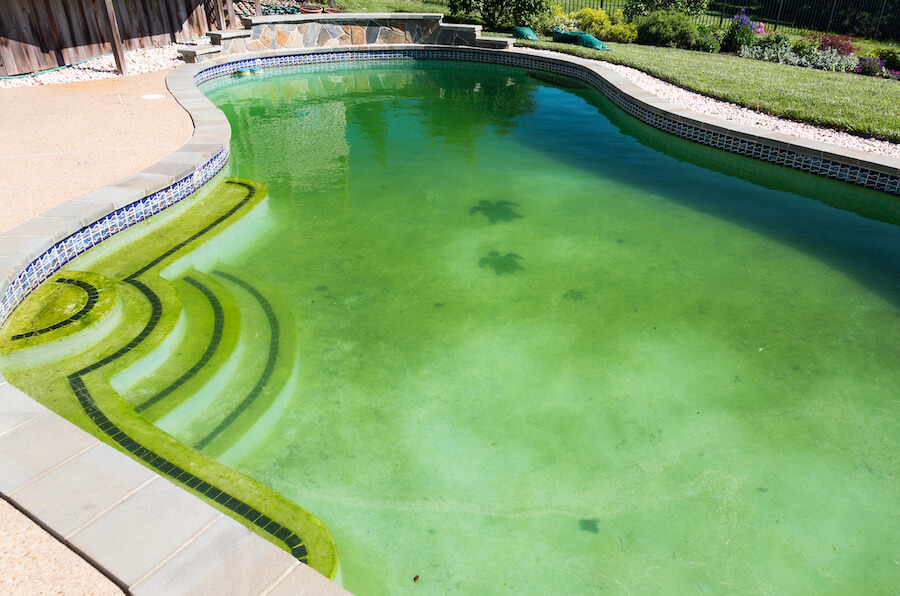
Low chlorine, poor circulation, and warm weather can all contribute to increased algae.
How to remove algae from a swimming pool: a step-by-step guide
Once you’ve identified the cause, it’s time to tackle the appearance of algae head-on. Follow these five steps in order, it’s important to not miss any.
1: Clean and prep the pool
Skim off any leaves and debris, then brush the pool walls and pool floor vigorously with a stiff pool brush. Use a nylon brush for vinyl or fibreglass and a wire brush for concrete pools. Brushing breaks the protective coating around the algae so your chemicals can do their work.
2: Test and balance the water
Use test strips or a digital kit to check your levels. You’re aiming for:
- pH: 7.2 – 7.4
- Alkalinity: 80 – 120 ppm
Balance the water before adding anything else, it’s the single biggest factor in successful algae removal.
3: Shock the pool
Standard sanitiser won’t cut it. Use a high-quality chlorine shock treatment (liquid or chlorine granules):
- Light green algae: double dose
- Dark green pool algae: triple dose
- Black algae or mustard algae: quadruple dose
Always shock at dusk so UV rays don’t degrade the chlorine before it can fight the algae.
4: Run the filter and add algaecide
Run your pool pump 24/7 until the water clears. Once chlorine levels fall below 5 ppm, add a heavy-duty algaecide to eliminate any remaining algae spores. The water will turn cloudy and milky white, a sign the algae is dead.
5: Vacuum and clean the filter
Vacuum the bottom of your pool directly to waste, bypassing the filter, so dead algae don’t recirculate. Then backwash or chemically clean the filter cartridges. Skipping this step is the number one reason algae returns within a fortnight.
How long does it take to clear a green pool?
For a light green pool, expect 24 to 48 hours of running the filtration system continuously. A heavily neglected pool with black algae or pink algae can take four to five days of repeated shock treatment, brushing and filter cleaning before the water runs truly clear.
How to prevent the build-up of algae moving forwards
Regular pool cleaning and consistent chemistry are far cheaper than emergency treatments. As per the the Pool Water Treatment Advisory Group (PWTAG), maintaining a free chlorine residual of 1-3 ppm is the single most effective defence against pool algae.
| Prevention pillar | Best practice |
|---|---|
| Chemical consistency | Test pool water 2-3 times a week; keep free chlorine at 1-3 ppm |
| Water circulation | Run the pool pump 8-12 hours daily during summer |
| Regular brushing | Brush dead zones, steps and corners weekly |
| Filter maintenance | Chemically clean your pool filter at least twice a season |
| Pool cover | Use a quality pool cover to limit debris and types of bacteria entering the water |
Residential vs commercial algae growth management
The presence of algae is a problem at any scale, but the urgency and approach differ considerably between domestic and commercial settings.
Residential pools
For homeowners, a green pool is frustrating but rarely critical, although it’s important to get the issue sorted because swimming with algae can be risky from a health standpoint.
Though most pool owners can follow the steps above and have their pool swim-ready within a couple of days. We regularly help private clients across Devon and Cornwall recover their pools after holidays or storm damage.
Commercial pools
For hotels, holiday parks, schools and leisure centres, an algae issue is far more serious. A closed commercial pool means lost revenue, unhappy guests and potential health code violations.
Commercial swimming pool owners need rapid-response chemical treatments, automated dosing checks and rigorous log-book management. Our commercial maintenance teams across the South West are equipped to respond quickly, often resolving issues before guests even notice, whether it’s a small bit of algae or an entire pool that needs refurbishing to look as good as new for the upcoming season.
Swimming pool maintenance from Signature Pools
Established in 2008, Signature Pools is an award-winning family-run business specialising in premium swimming pools, spas and leisure facilities across Devon, Cornwall, Somerset, Dorset and Bristol.
We design, build and maintain high-quality residential and commercial swimming pools, including concrete pools, one-piece pools, liner pools and modern luxury leisure spaces. Our accreditations include membership with SPATA, BISHTA and the Institute of Swimming Pool Engineers.
Whether you need help restoring a green pool, ongoing servicing or a completely new swimming pool installation, our experienced team is here to help.
Contact us today on 01626 333414 or email info@signaturepoolsuk.com to discuss your swimming pool maintenance requirements.