How to drain a swimming pool safely: Step-by-step
- 23 October 2026|
- News
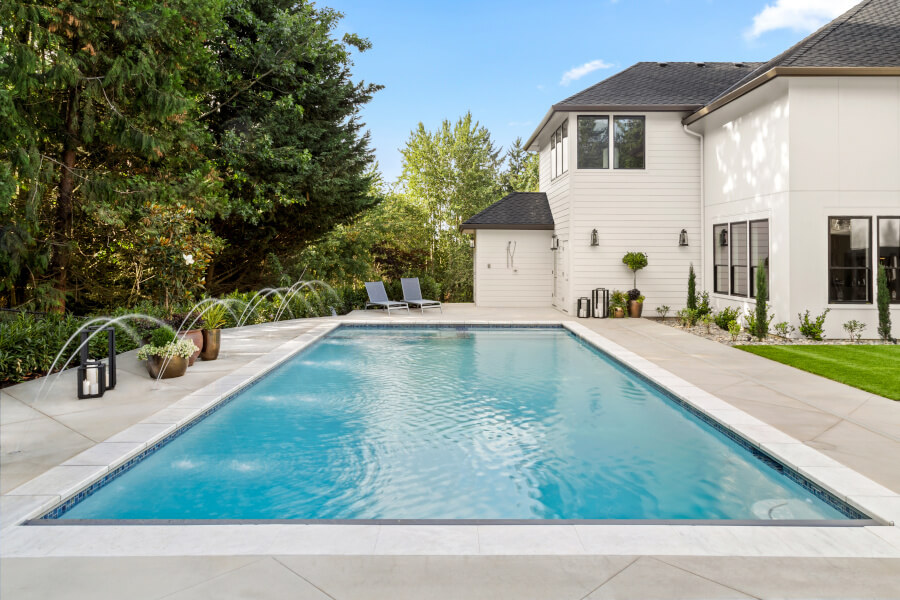
How do you drain a swimming pool? You’ll need the right equipment (typically a submersible pump, a discharge hose and a pool test kit), a safe area to empty the water and a slow, controlled draining rate.
Prior to draining any pool, domestic or commercial, you’ll need to make some important checks to ensure the process can be carried out safely. These cover groundwater, water chemistry, and of course, disposal.
Regarding the appropriate methods when draining a swimming pool, it’s important to state from the start that this is almost entirely dependent on the type of pool you’re working with. Concrete, block liner, one-piece fibreglass and wooden pools all react differently once water comes out.
It’s a significant job, and one that isn’t risk-free. Making a mistake in the draining process can lead to a floating liner, or worse, a cracked shell. If you’re looking to drain a commercial pool, the risk is even greater, as emptying it into the sewers without permission is a criminal offence that can lead to fines. That’s why at Signature Pools, we offer to take care of this process for you, and we’ve been draining, repairing, refurbishing and installing pools of all kinds across the South West since 2008.
Draining a pool is worth doing in the right situation, especially if you need to perform a deep clean or improve the water quality. In this blog, we’ll outline how you can drain your pool safely, regardless of its material and size.
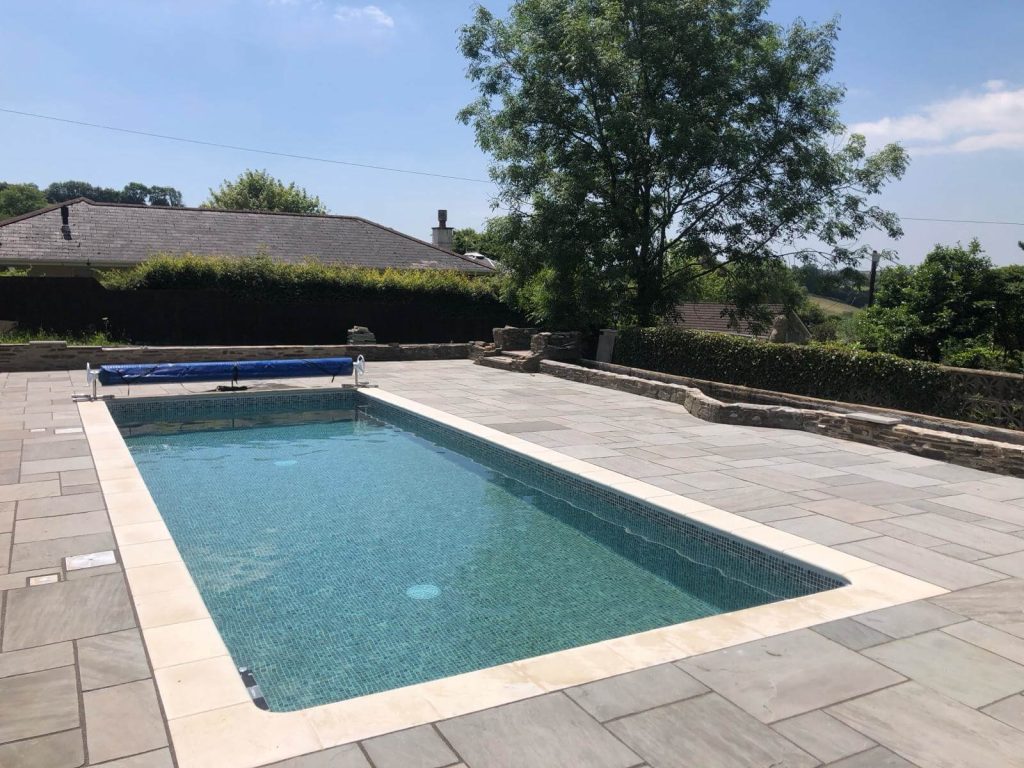
How do you drain a swimming pool?
You drain a swimming pool by confirming it needs emptying, checking groundwater and disposal permissions, neutralising the chlorine, then pumping the water out slowly with a submersible pump and discharge hose. The pace, the final water level and how long it can sit empty all depend on your pool’s construction.
1. Equipment checklist
For most pools, you’ll need:
- Submersible pump: an electric pump that sits on the pool floor and pushes water out through a hose. It’s faster and safer than a traditional pool pump.
- Sump pump or puddle pump: clears the last few centimetres that a standard pump leaves behind.
- Layflat discharge hose: long enough to reach your approved disposal point. A garden hose can usually take care of small volumes, but it’s slow on larger pools.
- Pool test kit: to check chlorine levels and pH before any water leaves your property.
- Dechlorinator: such as sodium thiosulfate, if you can’t wait for chlorine to dissipate.
- Safety kit: RCD-protected power for every pump, gloves and non-slip footwear.
Concrete pools
Most concrete pools are built from hollow concrete blocks and finished with tiles. They’re heavy, but if the ground is waterlogged, an empty pool can rise out of position, which is problematic. Some pools have a relief valve in the floor that lets this groundwater into the pool instead, easing the pressure. Keep a sump pump handy to remove this water once enough pressure has been relieved, and use a wire brush for cleaning.
Block liner pools
These have a concrete base with a vinyl liner held in place by the water’s weight. Put a soft mat under the pump and use a nylon brush. Older liners rarely settle back after a full drain.
One-piece pools
Usually fibreglass, pre-sized and quick to install, these shells rely on the water inside to resist the surrounding soil. Use a soft pump base and a nylon brush.
Wooden pools
Wooden pools mainly suit above-ground installations. Route the discharge hose well away from the base so you don’t saturate the ground beneath it.

2. Safe draining rates
Drain too quickly, and you can overwhelm the drain, flood a neighbour’s garden or strain the shell before groundwater shows itself. There are a few legal steps before proceeding too.
Across much of our area, the sewers are run by South West Water or Wessex Water. South West Water requires commercial operators to get permission before every emptying into the sewer network, with the timing, treatment and rate determined and agreed as part of that process. Emptying a commercial pool without permission breaches section 111 of the Water Industry Act 1991 and can lead to a fine. It’s one reason many commercial sites bring us in to manage the process.
- Concrete pools: drain steadily and stop at once if groundwater enters.
- Block liner pools: drain only as far as the job requires. Unless you’re re-lining, avoid emptying completely.
- One-piece pools: go slowest of all, and stop if the walls bulge or the floor moves.
- Wooden pools: drain steadily, with the discharge well clear of the base.
3. Pre-drain checks
- Do you actually need to drain? Our non-invasive leak detection, from bucket tests to dye and pressure testing, finds most leaks with the water still in. Algae growth can usually be treated without draining, too.
- Check groundwater and weather. After a wet South West winter, the water table can sit surprisingly high. Avoid draining after heavy rain or in hot sun that bakes an exposed liner or shell.
- Confirm your disposal route. Anything going into the sewers needs your water company’s permission. Discharges to rivers, streams or the ground are regulated by the Environment Agency and usually need an environmental permit. Never send chlorinated water down a storm drain, as it flows untreated into local watercourses.
- Neutralise the chemicals. Stop dosing and test until chlorine reads close to 0 ppm (parts per million).
4. The draining process, step by step
- Isolate the heater, pool pump, dosing system and any automatic top-up.
- Place the submersible pump at the deepest point, on a soft mat for liner and fibreglass pools.
- Secure the discharge hose at the agreed drain point.
- Start the pump and check the discharge point for backing up.
- Monitor the pool and waterline throughout. Never leave the pump unattended for long periods.
- Finish with a sump or puddle pump.
- Do the work promptly. An empty pool, especially a liner pool, should stay empty as briefly as possible.
5. Refilling and rebalancing
Draining is often the only fix for high TDS levels (total dissolved solids, the salts and residues that build up over years) or excess cyanuric acid, a chlorine stabiliser that doesn’t break down. Refill with fresh water, then rebalance pH, alkalinity, calcium hardness and chlorine.
Check every suction outlet cover before refilling. Suction entrapment, where a swimmer is held against an outlet, is rare but serious.
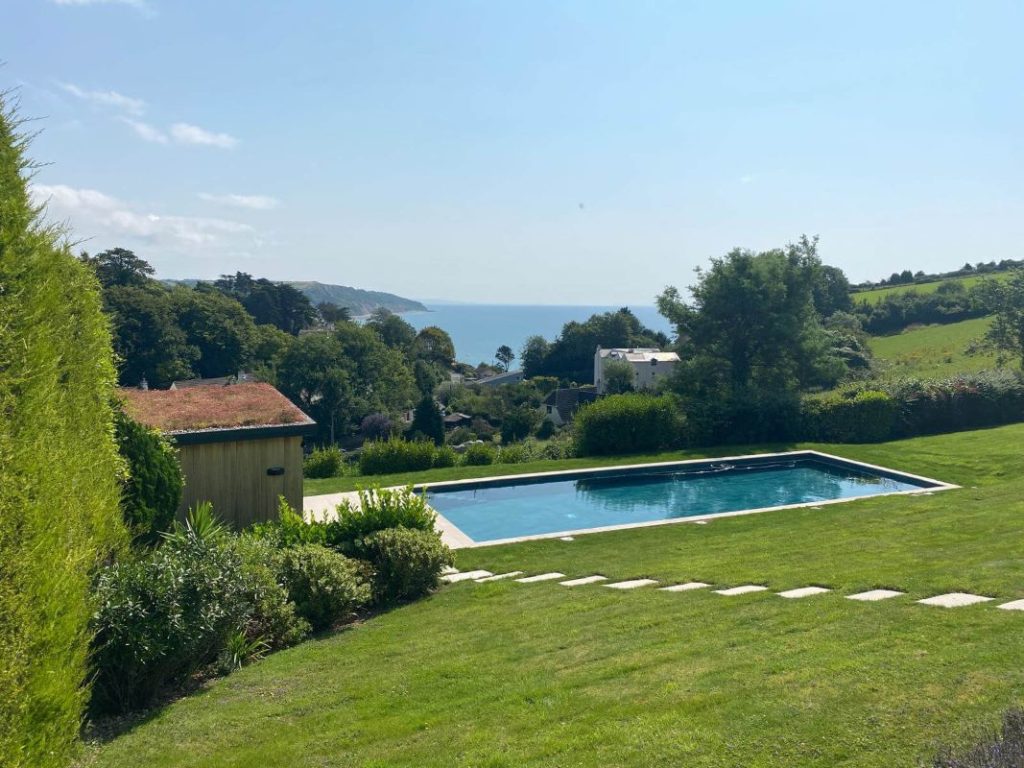
Domestic vs commercial pools
At home, the main risks are structural damage and getting disposal wrong. For hotels, holiday parks, schools, fitness centres and hydrotherapy pools, larger pools mean bigger volumes, more consent required over drainage and downtime that leads to a loss of revenue.
Plant rooms and balance tanks (reservoirs that collect overflow water) often count as confined spaces, needing trained staff, a risk assessment and a safe system of work.
When is professional help recommended?
Draining a pool carries enough challenges that professional help is often recommended. If you find yourself in any of these situations, we’d recommend hiring a professional to carry out the work for you:
You own a liner pool
A vinyl liner needs the water’s weight to hold its shape. Once emptied, it can shrink, wrinkle or tear, so professional assistance is highly recommended in this case.
You have a one-piece shell
Fibreglass shells rely on internal water pressure. Empty one carelessly and the walls can bulge or the floor can lift.
You suspect a leak or structural damage
Water loss can seriously damage the shell and surrounding soil. Draining without a survey risks making things worse.
You’re planning a winter shutdown
There’s rarely a need to empty a pool for winter. A full pool is far better protected against groundwater.
It’s a commercial pool
Water company consent, confined spaces and reopening deadlines make this a job for qualified professionals.
Pool draining done for you by Signature Pools
Proper pool draining takes experience, the right equipment and a sound grasp of the regulations. That’s what we bring to every job.
We’re a family-run, award-winning business established in 2008, serving Devon, Cornwall, Somerset, Dorset, Gloucestershire, Bristol and South Wales. We’re SPATA and BISHTA members, our lead engineers belong to the Institute of Swimming Pool Engineers and our Managing Director, Keir, is a senior member of the Water Management Society.
We handle:
- A site survey to confirm draining is genuinely needed
- Groundwater checks and a plan tailored to your pool type
- Water company consent and responsible disposal, backed by our Higher Tier Waste Carrier licence
- Confined space work by fully trained staff
- Repairs, re-lining, re-tiling or plant upgrades while the pool is empty
- Refilling and rebalancing, so your pool is ready to swim
We treat water as precious, so we only recommend a full drain when it’s the right answer. Commercial clients get one team managing everything and a swift reopening. Homeowners get peace of mind.
Thinking of draining your pool? Call us on 01626 333414 or email info@signaturepoolsuk.com for expert advice on the safest approach.
Frequently asked questions
How do you empty a swimming pool?
Neutralise the chlorine, secure consent for your disposal route, then pump the water out slowly using a submersible pump, finishing with a puddle pump. Always check groundwater levels first.
How long does it take to drain a swimming pool?
It depends on the pool’s volume, your pump and any rate your water company sets. Most domestic pools take several hours to a day; larger commercial pools take longer.
Can I drain my pool into the garden?
Only with care. Chlorinated water can harm plants and saturate the ground around your pool, increasing groundwater pressure. Check local rules and ask us for the safest disposal route.
How often should you drain a swimming pool?
Rarely. Good pool care and regular partial water changes keep water quality high. A full drain is usually only needed for refurbishment, major repairs or stubbornly high TDS levels.