How to find a leak in your swimming pool
- 26 October 2026|
- News
Unexplained water loss, higher water bills with no obvious cause, damp patches around the pool itself, and a sudden spike in chemical usage, are all warning signs of a possible swimming pool leak.
It’s important to rectify these symptoms as quickly as possible, because a leaking swimming pool can weaken the shell, saturate the ground beneath the deck, and significantly push up your water bills. If you can catch the leak early on, you’re looking at a simpler, cheaper repair.
At Signature Pools, we specialise in detecting and repairing both residential and commercial swimming pool leaks. We regularly see owners simply topping up a leaking pool with fresh water, often blaming evaporation, which regularly leads to a bigger, more costly job later down the line.
We always aim to be transparent with you though, we’ll say if your issue is one that can be fixed yourself with a spot of DIY, or if you need to call in the professionals to ensure safe, cost-effective enjoyment of your pool.
We’ve put together this guide, which we hope identifies the issues you may be facing, whilst also outlining how to solve them.

How to find a leak in a swimming pool
We’ll outline how you can identify and then hopefully fix a leak. But first, here are a few symptoms that likely mean your pool is struggling with one.
Unexplained water loss
Some loss from evaporation, splashing and backwashing (flushing debris out of your filter) is normal. Regularly adding inches of water in cool, cloudy weather is not.
Rising water bills
If your water bills are climbing in an unusual manner while usage stays the same, water is going somewhere. On commercial sites, higher water bills are often the first clue.
Damp patches and wet spots
Check the area immediately surrounding the pool itself, especially the floor, and the equipment pad (the plant room housing your pool pump, filter and heater). Wet spots or sinking paving can point to underground plumbing leaks.
Spiking chemical usage
Fresh water top-ups dilute your water chemistry, so needing more chlorine than usual can signal a leak.
Visible cracks, loose tiles and lifting liners
Look for visible cracks in the pool wall, loose tiles or gaps around the pool coping (the capping stones at the pool’s edge). In a vinyl liner pool, check for tears or lifting.
Air bubbles in the return jets
Air bubbles in your return jets can mean a leak on the suction side of the plumbing system.

Is it a leak or just evaporation?
Every pool loses some water to evaporation, particularly on warm and breezy days. The difference with a leak is consistency. If your water level keeps dropping in cool and still weather or falls faster than a bucket test suggests it should, evaporation probably isn’t the culprit.
Next, confirm the leak and narrow down its location with these simple checks.
The bucket test
The bucket test compares your pool’s water loss with natural evaporation. It’s worth doing, with certain estimates stating that 30% of pools have a leak, many of them undetected.
- Switch off any automatic top-up valve.
- Fill a bucket with pool water and stand it on a pool step so the rim sits above the waterline. A brick inside will keep it steady.
- Match the water level in the bucket to the pool water level.
- Mark the level inside the bucket, then mark the pool level on the outside. A piece of electrical tape works well.
- Leave it for two to three dry days, then compare.
If the pool has dropped more than the bucket, you very likely have a leak. If both have dropped by the same amount, that’s good news: it’s evaporation.
Repeat the test with the pump running and then switched off. Greater loss with the pump on points to the plumbing lines, while similar loss suggests the pool structure.
The dye test
Once you suspect a spot, switch off the pump and let the water become as still as possible. Release a few drops of pool leak-detection dye near the suspected area. Food colouring can also work in a pinch.
Watch closely. If the dye is clearly pulled towards a crack, fitting or opening and disappears into it, this is a strong sign of a leak.
However, the dye may sometimes simply sit or slowly disperse. A lack of movement does not necessarily mean there is no leak, particularly if the leak is very small or slow.
Common areas to check include pool lights, return jets, skimmer fittings and visible cracks.
Monitor where the water stops
Stick a piece of electrical tape at the current water line and note the level each day. If the water stops dropping at a certain point, such as the bottom of the skimmer or just below the pool lights, the fitting at that height is a likely suspect.
Check your pool equipment
With the pump running, check the equipment pad for drips around the pool pump, filtration system, heater and valves. Water running from the backwash line (the pipe carrying waste water from your filter) outside of a backwash cycle is a giveaway.

Why it’s so important to fix a leak
Even a small leak is something to take very seriously. Water loss chips away at your pool, your property and your bottom line.
Structural damage to the pool shell
Escaping water widens cracks and washes out material behind the pool wall, turning a hairline fault into serious structural damage.
Risk to foundations and surrounding property
Leaking water saturates the ground, causing sinking paving, a shifting pool deck and damp in nearby buildings. In winter, water trapped in cracks can freeze and expand, making things worse.
Higher utility bills
Every litre lost must be replaced and, in a heated pool, reheated, adding a steady and avoidable cost to every bill.
Chemical imbalance and algae growth
Constant top-ups upset your water chemistry. As sanitiser levels drop, algae takes hold, adding cleaning time and chemical costs.
Equipment failure
As the water level falls, your skimmer can start drawing in air. That forces the pool pump to run dry, overheat and wear out long before its time.
Is DIY an option?
Honestly? Up to a point. DIY tests are a sensible first step, and they give us useful information if we’re called out.
Where you can reasonably go it alone:
- Running a bucket test to rule evaporation in or out
- Dye testing a visible crack or fitting in shallow, easy-to-reach water
- Checking the equipment pad for obvious drips
- Tracking your pool water level and noting where it stops dropping
Where the risk outweighs the benefit:
- Underground plumbing leaks: Without specialist equipment, finding them means guesswork, and potentially ripping up a patio unnecessarily.
- The main drain and deep-end fittings: These sit at the deepest point of the pool and aren’t safe or practical to test without the right kit.
- Pool lights: Leaks around the light housing involve water and electrics, which is never a mix to tackle yourself.
- Hairline cracks: Many are simply invisible to the naked eye.
- Vinyl liner tears below the waterline: A rushed patch on a vinyl pool can fail quickly and hide the real problem.
- Commercial pools: Downtime, compliance and swimmer safety are all on the line, so a fast and accurate diagnosis pays for itself.
Professional leak detection and repair from Signature Pools | Domestic & commercial
Our swimming pool leak detection and repair offers you state-of-the-art technology to locate and fix a suspected leak, a cost-effective way to avoid potentially expensive excavation later down the line.
During every visit, we carry out a series of tests that evaluate the safety and structural integrity of your pool. That includes its structural elements, such as the durability and integrity of tiles, floors and fittings. Our investigation combines:
- Visual inspections to spot wear, tear and damage that could lead to leaks
- Dye testing to confirm exactly where water is escaping
- Electronic testing to trace leaks that can’t be seen
- Pressure testing, where we seal a section of pipework and pressurise it to see if it holds, revealing hidden faults in underground plumbing
These tests reveal the location and magnitude of each leak. Testing is non-destructive, and most minor leaks can be repaired without draining the pool.
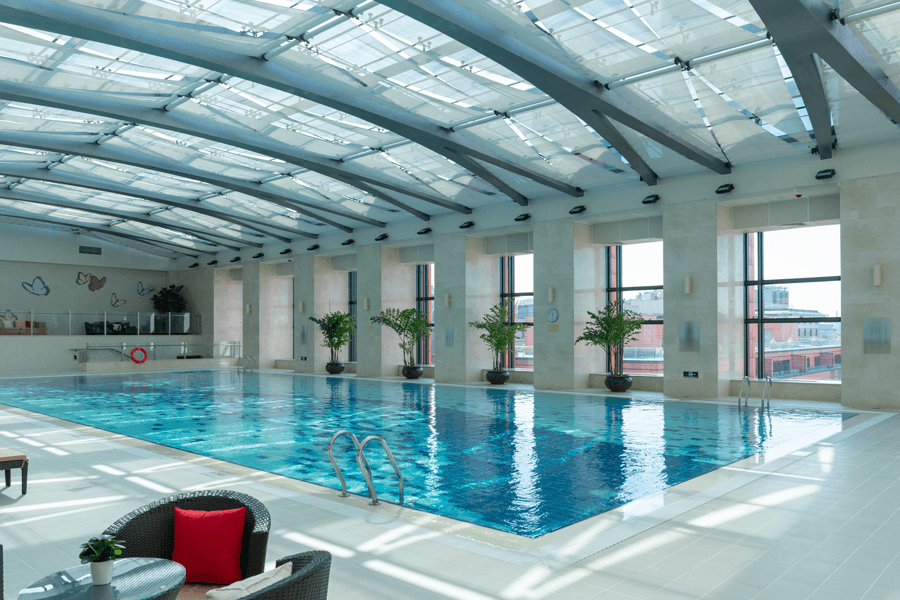
For homeowners
We’ll find the problem, explain it clearly and put it right, giving you peace of mind that your pool is leak-free and safe to use.
For commercial facilities
We work with hotels, holiday parks, fitness centres, public leisure pools, schools and specialist hydrotherapy pools. For operators, a leak also means lost revenue from closures and risk to your reputation. Our commercial service delivers:
- Risk mitigation: Early detection prevents further damage to your pool
- Cost savings: Catching leaks early saves money in the long term
- Compliance: Helping you maintain adherence to industry regulations and standards
- Extended lifespan: Regular servicing preserves your pool structure for longer
Every pool receives a customised set of tests tailored to its specification. We offer one-off visits or bespoke service packages to suit your facility.
Why trust Signature Pools?
We’ve been designing, building and caring for pools since 2008. We’re proudly a family-run, award winning business.
- Accredited expertise: We’re proud members of SPATA (the Swimming Pool and Allied Trades Association), and BISHTA (the British and Irish Spa and Hot Tub Association). Our Managing Director Keir is also a member of the Institute of Swimming Pool Engineers.
- Recognised quality: We were the LABC Building Excellence Regional Winner in 2020.
- Local knowledge: We serve homes and businesses throughout Devon, Cornwall, Somerset, Dorset and Bristol.
- End-to-end service: Beyond leak detection, we handle pool design and installation, refurbishment, plant room repairs and ongoing maintenance, along with spas, saunas and steam rooms.
- Sustainability: We prioritise water conservation, and fixing a leak quickly is one of the simplest ways to stop precious water going to waste.
Spotted the warning signs? Don’t let a small leak turn into a major repair. Our team will find the problem, explain it clearly and fix it with minimal disruption to your pool. Call us on 01626 333414 or email info@signaturepoolsuk.com to book a professional inspection or to discuss any of our pool and leisure services.